
Cross Roller Bearing Noise
Noise should be reviewed with the whole assembly. TFL Bearings can check model evidence, dimensions, photos, mounting condition, application, load direction, quantity, and target timing if replacement or technical review is needed.
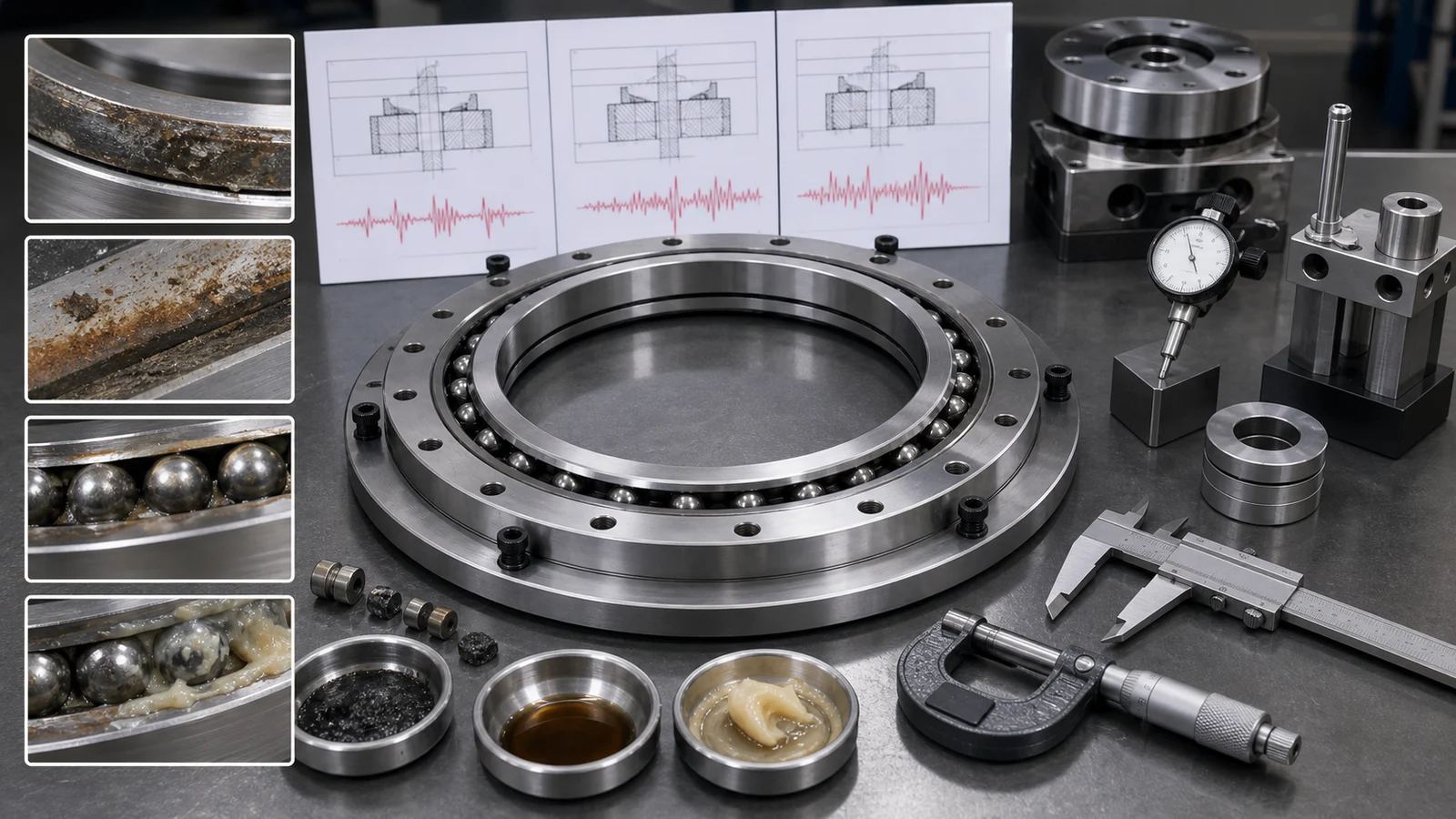
Practical Review Overview
Problem review starts with symptoms and evidence before replacement is selected.
Noise, rough motion, heat, or runout
Record when the symptom appears and whether it is load, speed, or temperature dependent.
Mounting and preload condition
Mounting distortion, preload error, and seating issues can imitate bearing failure.
Grease, contamination, and environment
Lubrication condition and contamination exposure can change the review path.
Replacement trigger
Replacement review should start after model and cause evidence are separated.
Symptom and Check Matrix
A cross roller bearing should be reviewed in the context of the whole assembly.
Noise or rough motion
Check bearing photos, lubricant condition, mounting face, preload or clearance, and contamination.
Heat or tight rotation
Check assembly method, fastener sequence, load direction, duty cycle, and lubrication.
Looseness or poor rigidity
Check bore, OD, width, shoulder support, fasteners, hole pattern, and application load.
Runout or positioning issue
Check seating face, mounting distortion, ring structure, accuracy requirement, and measurement method.
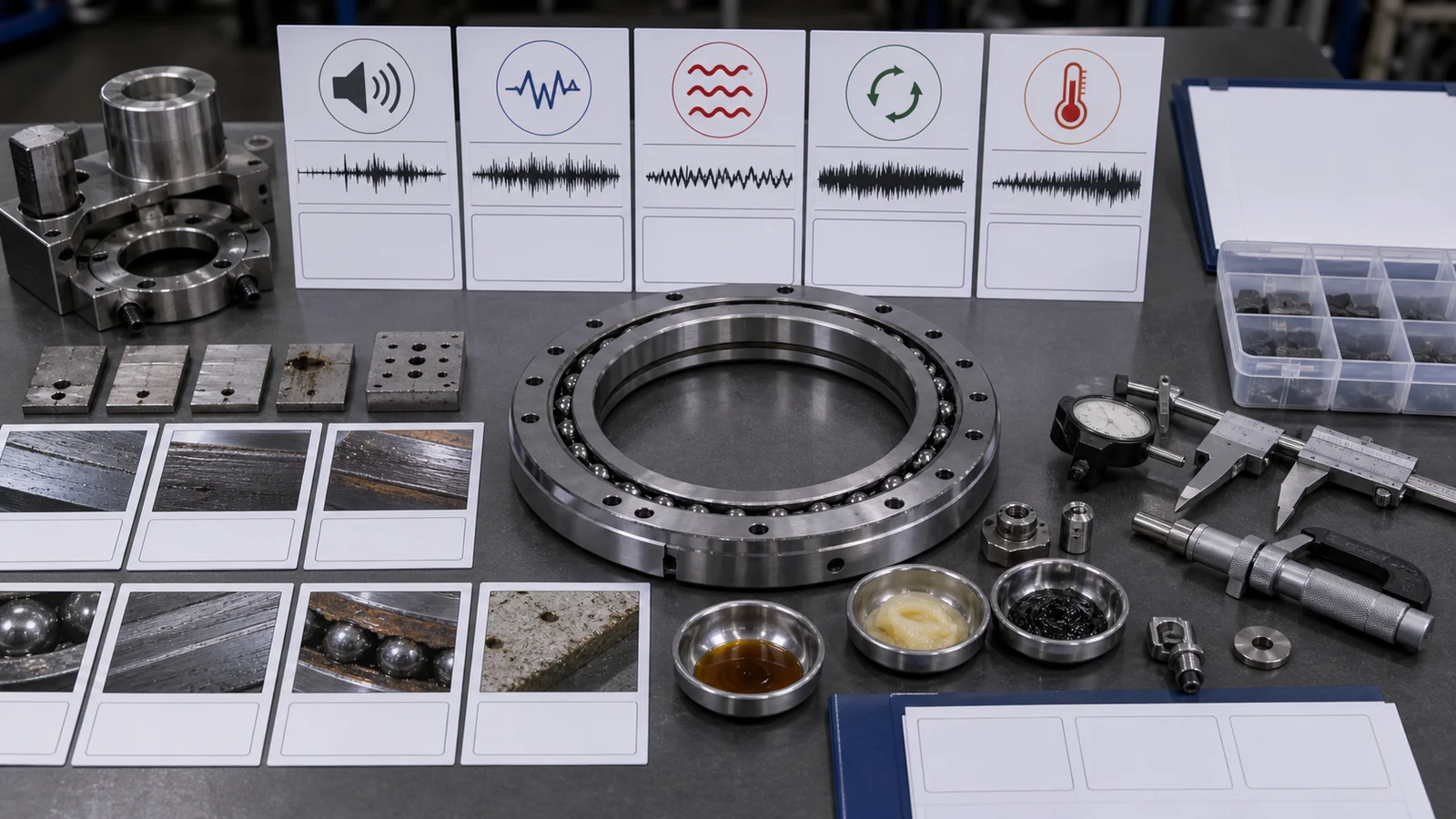
TFL Supply Chain Review Support
TFL Bearings acts as a bearing supply chain integrator, so model review can also cover sourcing route, cost-saving alternatives, inspection, documents, and export coordination after RFQ evidence is validated.
Pre-audited manufacturing resources
TFL Bearings can coordinate cross roller bearing options across reviewed China manufacturing resources when the RFQ includes model, drawing, quantity, and application evidence.
Cost-saving candidate review
For replacement or cross-reference work, TFL Bearings can review dimensional interchangeability, preload, accuracy, rigidity, mounting, and application limits before quotation.
BOM and shipment coordination
Mixed-model requests can be reviewed for one PO, combined shipment, inspection, export packaging, and document support when the order scope is clear.
Problem Review Boundary
Boundary wording separates symptom evidence from root cause and quotation decisions.
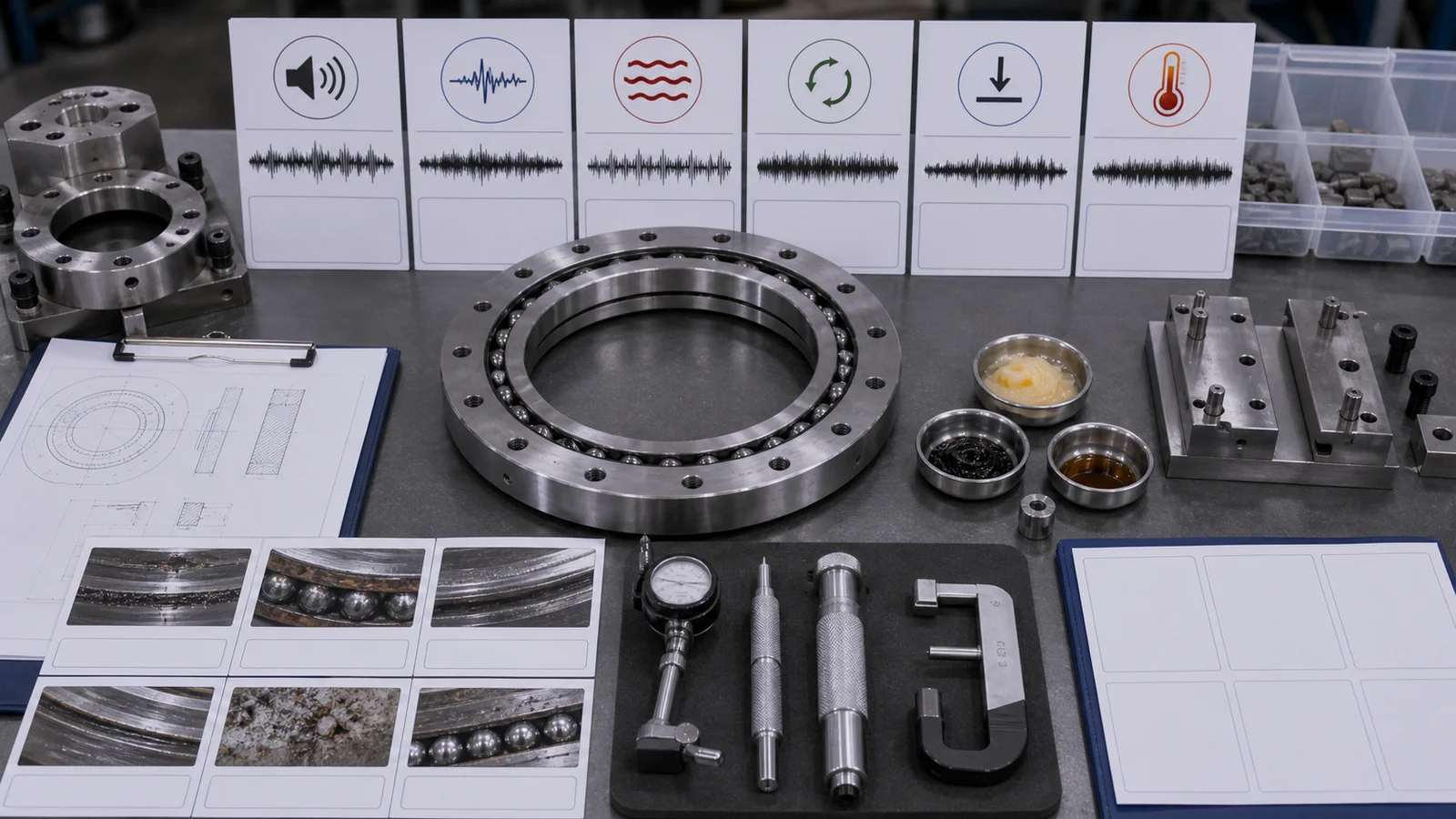
What to Send TFL Bearings
A useful noise review package links symptom evidence to model identity and operating context.
Engineering Decision Layer
TFL Bearings checks symptom evidence, operating condition, damage pattern, lubrication state, mounting risk, and whether replacement review is required.
Noise, vibration, heat, rough motion, or runout tied to operating condition
Decides whether the review starts with installation, lubrication, product, or replacement evidence.
Mounting deformation, preload error, seating face, and fastener sequence
Can imitate bearing failure and should be checked before replacement selection.
Grease condition, contamination, temperature, duty cycle, and sealing
Can change diagnosis and replacement scope before RFQ.
Old model, dimensions, damage photos, quantity, and urgency
Moves the request toward replacement review only after evidence supports that path.
Application Fit Notes for Noise Review
The same noise symptom can have different causes depending on machine condition.
RFQ Process Depth Layer
Problem review moves from symptom evidence to bearing identity, risk review, and RFQ decision.
Symptom evidence review
TFL Bearings reviews noise, vibration, heat, wear, mounting, lubrication, and contamination evidence.
Bearing identity check
Symptom evidence is matched with model marking, dimensions, photos, and machine context.
Risk and replacement trigger
The review separates installation, lubrication, operating condition, and replacement paths.
RFQ decision
Validated evidence, quantity, and timing define quotation follow-up or missing evidence.
Practical RFQ Checklist
Prepare these details before asking TFL Bearings to review cross roller bearing noise.
Request Problem Evidence Review- Symptom description: noise, vibration, heat, rough rotation, runout, or visible damage.
- Bearing identity: model marking, dimensions, photos, drawing, or previous order line.
- Operating condition: load direction, speed, lubrication, duty cycle, environment, and recent maintenance.
- Machine interface: housing, shaft, mounting face, preload, and assembly context.
- RFQ trigger: replacement quantity, timing target, destination, and document needs.
- Open questions that should be reviewed before replacement selection.
Related Product, Application, Problem, and RFQ Links
Use these review paths to connect provided evidence with the next sourcing, application, replacement, or RFQ action.
Cross roller bearing problem diagnosis
Route broader problem evidence.
Review optionCross roller bearing range
Connect symptoms to product family review.
Review optionInstallation guidance
Use when mounting or assembly may be involved.
Review optionRFQ submission
Send symptom evidence for review.
Review optionFAQ
Yes. Noise can involve lubrication, contamination, mounting face error, preload or clearance mismatch, overload, alignment, fasteners, or surrounding machine parts.
Inspect bearing marking, dimensions, mounting hole pattern, seating face, shoulder support, fasteners, lubrication, contamination exposure, and load direction.
Yes. Photos, drawings, measured dimensions, symptom notes, lubrication context, mounting details, application, and quantity can support review.
Replacement review may be appropriate when model evidence, dimensions, mounting interface, old bearing condition, and application context support that route.
Send symptoms, model evidence, dimensions, photos, mounting condition, application, load direction, quantity, target timing, and document needs.