
Crossed Roller Guides for Precision Linear Motion
A crossed roller guide is a rail-and-roller linear-motion arrangement, not a complete slide table or rotary bearing. Start with rail length, usable travel, mounting face, cage condition, load direction, and accuracy needs.
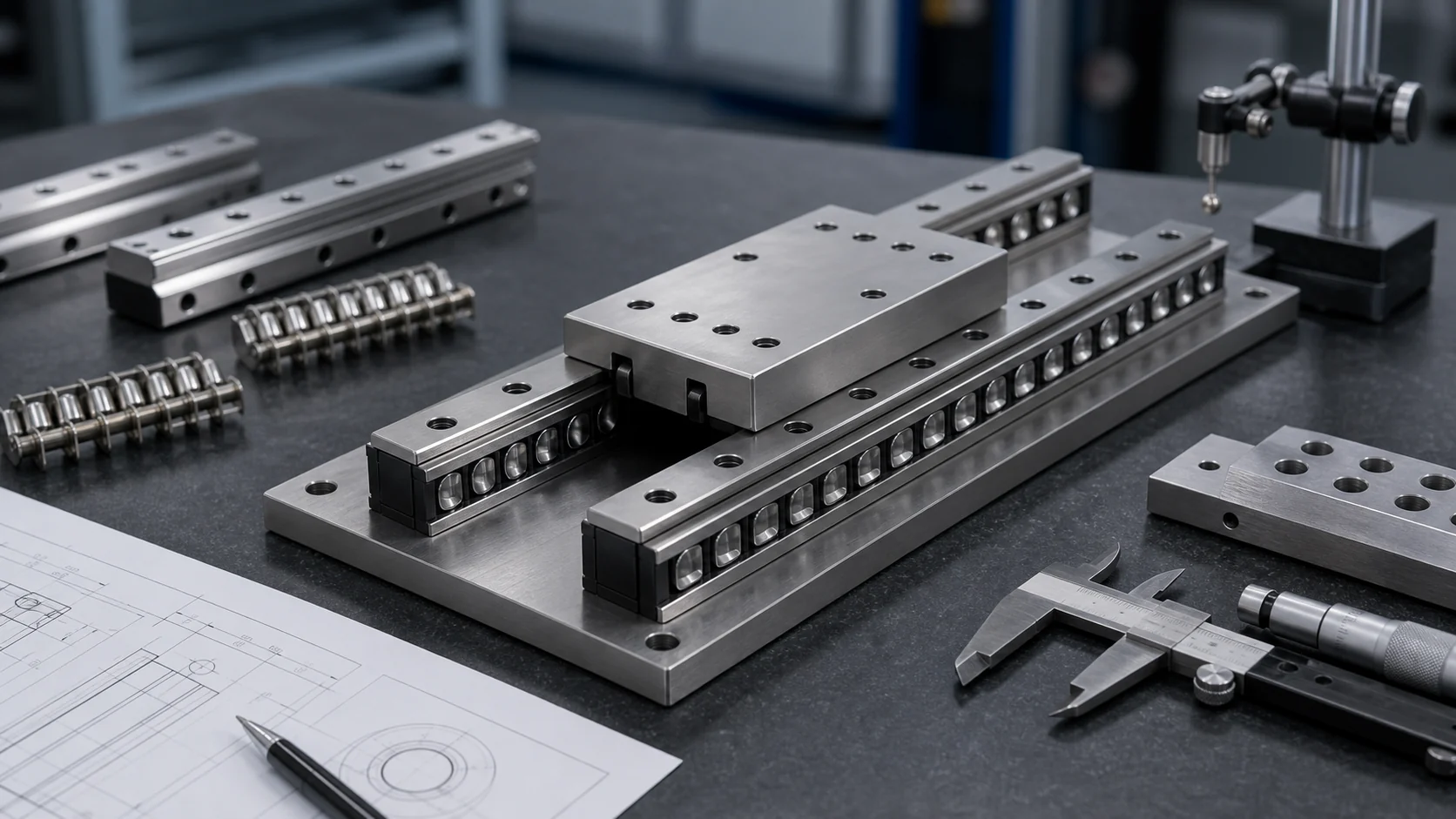
What Defines a Crossed Roller Guide Request?
The guide itself provides linear rolling support between rails. A usable request must distinguish the guide set from the surrounding table, base, and drive mechanism.
Rails, rollers, and cage
Identify the guide arrangement, visible markings, roller cage, and whether the request is new selection or replacement.
Rail length and usable travel
State required travel separately from total rail length and note any end-stop or cage-position constraint.
Mounting face and hole pattern
Show seating faces, hole locations, orientation, and how the two rails are aligned in the machine.
Load, accuracy, and environment
Describe load direction, motion cycle, rigidity or repeatability need, contamination, and lubrication context.
Guide Selection and Installation Inputs
These inputs determine whether TFL can review a guide candidate without confusing it with a complete slide table.
Identify the guide set
Send the full model or marking and clear photos of both rails, rollers, cage, and installed orientation.
Separate travel from rail length
Provide total rail length, required usable travel, moving member length, and any end-stop or cage-position limit.
Document the mounting faces
Show hole pattern, datum surfaces, seating quality, parallelism concerns, and adjacent machine interface.
State the motion requirement
Describe load direction, duty cycle, rigidity, repeatability, preload condition, environment, and lubrication.
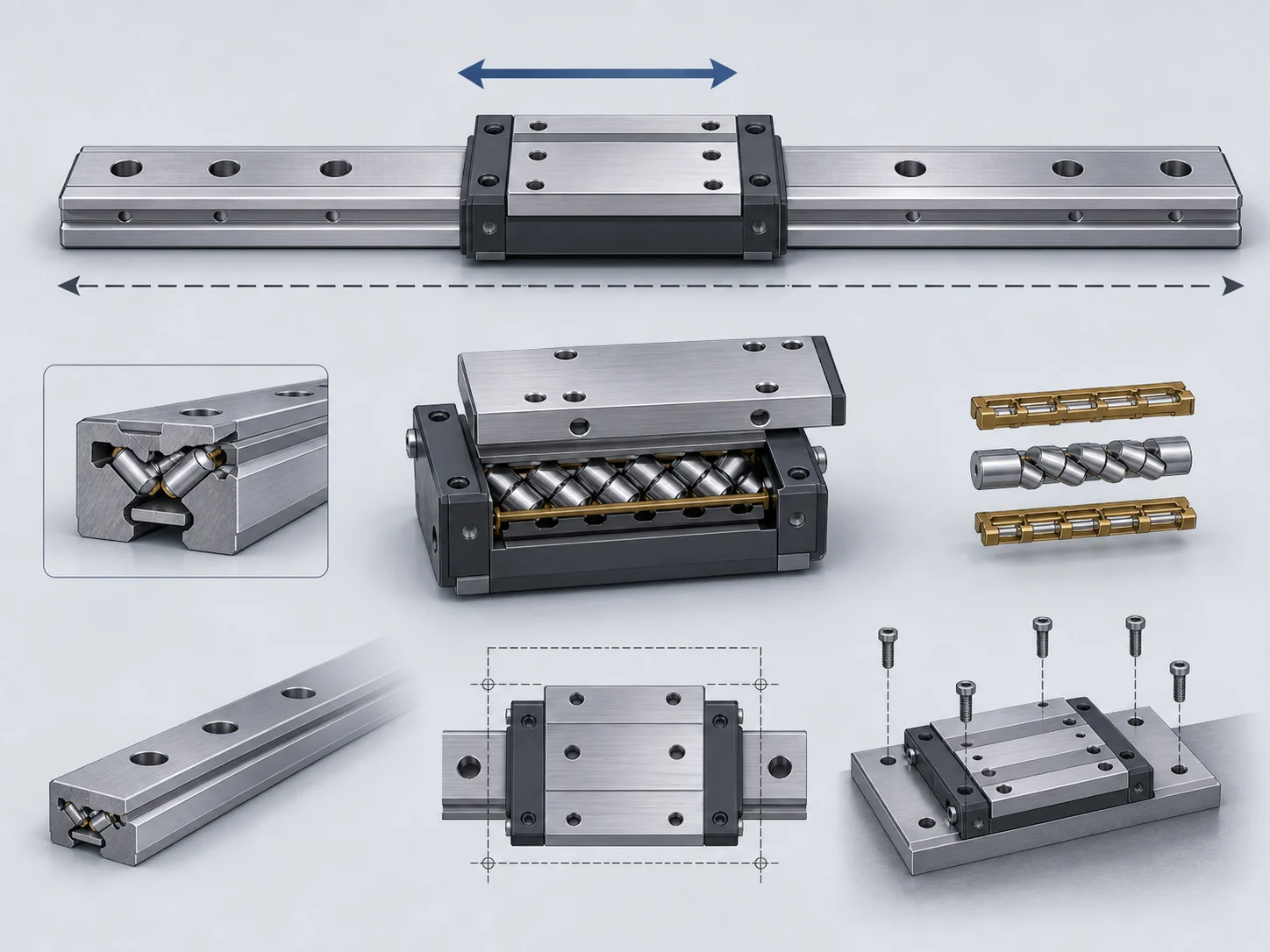
TFL Supply Chain Review Support
TFL Bearings acts as a bearing supply chain integrator, so model review can also cover sourcing route, cost-saving alternatives, inspection, documents, and export coordination after RFQ evidence is validated.
Pre-audited manufacturing resources
TFL Bearings can coordinate cross roller bearing options across reviewed China manufacturing resources when the RFQ includes model, drawing, quantity, and application evidence.
Cost-saving candidate review
For replacement or cross-reference work, TFL Bearings can review dimensional interchangeability, preload, accuracy, rigidity, mounting, and application limits before quotation.
BOM and shipment coordination
Mixed-model requests can be reviewed for one PO, combined shipment, inspection, export packaging, and document support when the order scope is clear.
Crossed Roller Guide vs Slide vs Rotary Bearing
Use the physical assembly and motion type—not only the search phrase—to choose the correct review path.
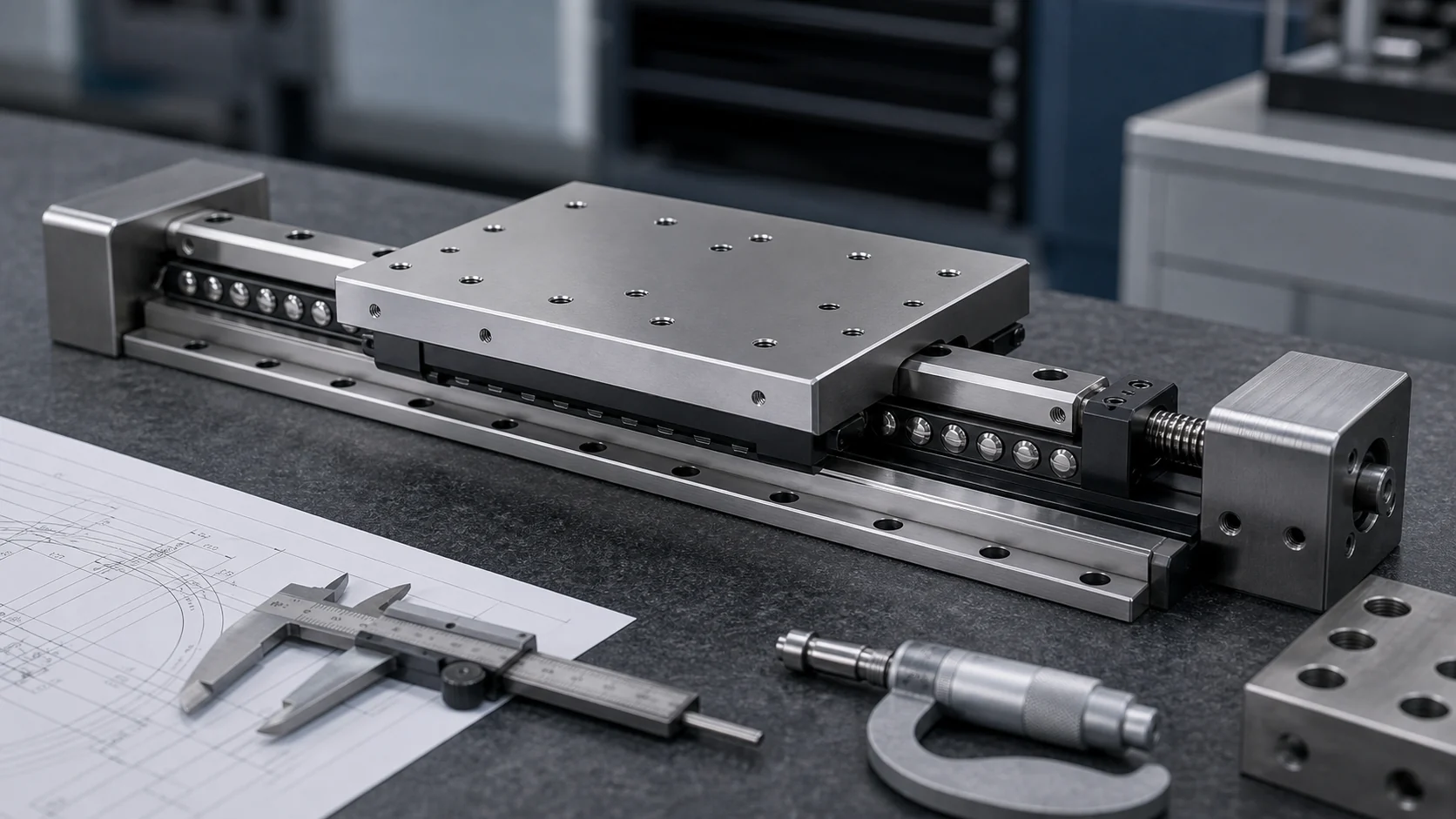
Crossed Roller Guide Drawing Checklist
A guide drawing or measured sketch should make the linear-motion geometry and installation boundary visible.
Travel, Mounting and Preload Review
Guide review connects usable travel and cage position with mounting-face quality, alignment, preload, load direction, rigidity, and repeatability. A category name alone cannot confirm fit.
Rail length, required usable travel, moving member, end stops, and cage condition
Insufficient travel margin or an unknown cage position can make a visually similar guide unsuitable.
Clearance, light preload, or defined preload condition
Changes stiffness, starting torque, heat, and service life before quotation.
Moment load, radial / axial support, and deflection limit
May change series choice, precision level, replacement path, or custom route.
Shaft fit, housing support, bolt pattern, and seating face
Mounting distortion can change runout and rotation or linear accuracy.
RPM, duty cycle, lubricant, heat condition, and environment
Can change feasibility before RFQ and should be validated with application context.
Guide Application and Installation Risks
The review should identify the machine condition most likely to control guide selection or replacement.
Crossed Roller Guide RFQ Review Workflow
TFL Bearings validates guide evidence, travel, mounting, and application conditions before quote preparation.
Evidence intake
TFL Bearings checks model evidence, drawing, dimensions, photo, application, quantity, timing, and sourcing scope before selecting the review route.
Engineering and sourcing validation
Load direction, preload, rigidity, mounting, accuracy, speed, heat, environment, stock/short-lead options, and candidate alternatives are reviewed before quote preparation.
Quotation decision
Price, lead time, inspection, document, packaging, and shipment notes are prepared only after the candidate route is validated.
Guide RFQ Evidence Checklist
Send the guide model, rail length, travel, mounting drawing or photo, load direction, accuracy or preload notes, quantity, and timing.
Send RFQ for Validation- Model code, partial code, or bearing marking photo.
- Bore, OD, width, mounting holes, flange, ring structure, rail length, or stroke as applicable.
- Drawing, installation photo, CAD reference, sample photo, or measured sketch.
- Application, load direction, speed, duty cycle, and environment.
- Preload, torque behavior, rigidity, repeatability, or accuracy requirement.
- Quantity, timing, destination, inspection need, document scope, packaging, and shipment context.
Related Product, Supplier, Application, and RFQ Links
Use these review paths to connect provided evidence with the next sourcing, application, replacement, or RFQ action.
Cross roller bearing product hub
Route rotary support questions.
Review optionCross roller slides
Route compact slide and stage movement.
Review optionLinear cross roller bearing supplier
Route supplier intent for linear motion.
Review optionAsk TFL to confirm the model
Send the guide details for review.
Review optionFAQ
A guide is the rail-and-roller linear support. A slide normally includes a moving table and base, so table envelope, stroke, and assembly interfaces become part of selection.
Yes. Total rail length does not by itself establish available travel. Include the moving member, cage position, end stops, and required stroke.
Send both-rail photos or a drawing, hole pattern, datum and seating faces, orientation, alignment concerns, load direction, and accuracy or preload requirements.
No. Availability, timing, and fit remain request-specific and can only be reviewed after the guide model, geometry, mounting, motion, and quantity are clear.