
Cross Roller Bearing Applications
Use this page to understand where cross roller bearings are used and which operating details should guide selection and RFQ preparation.
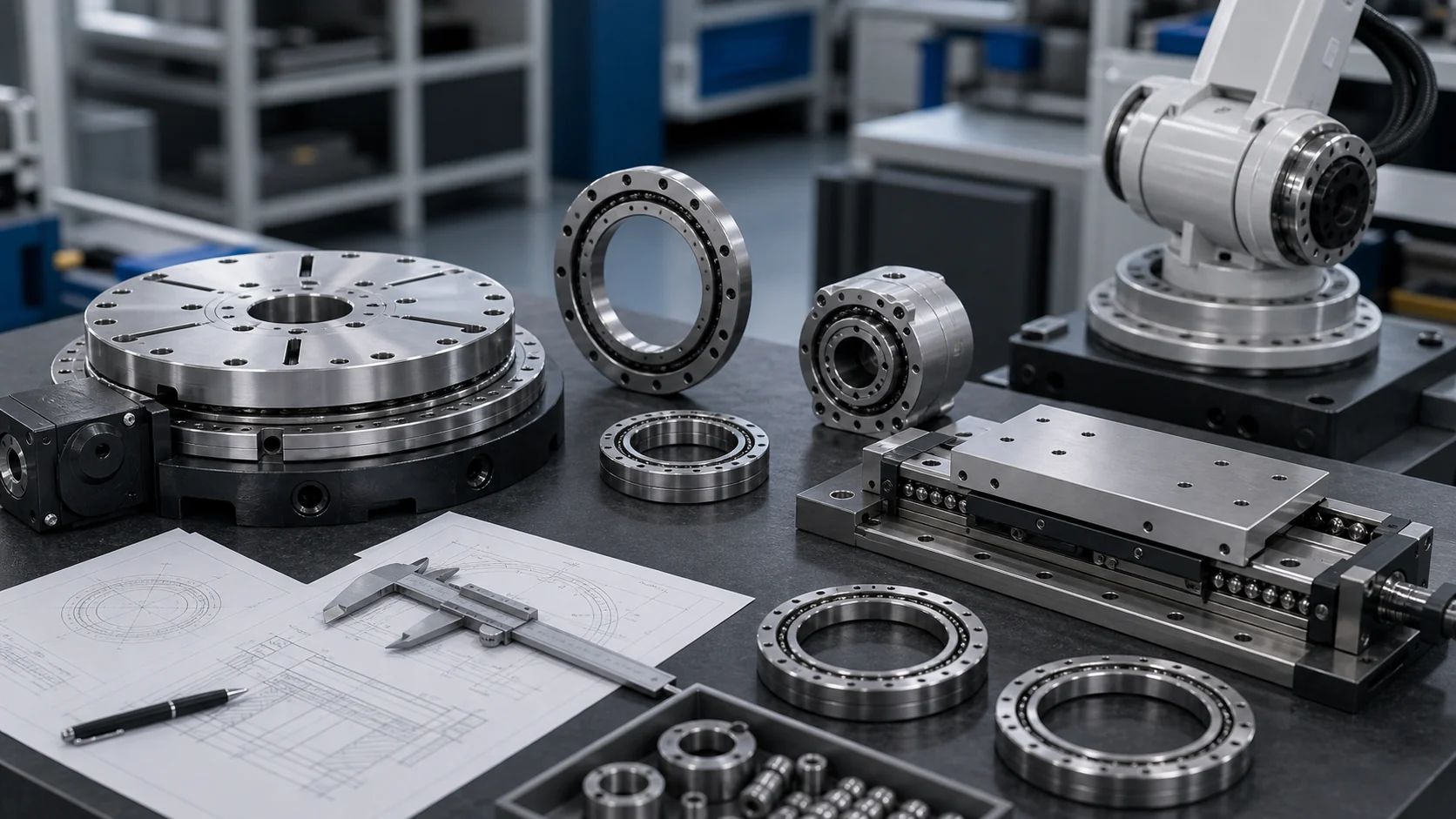
Application Requirements
Cross roller bearing applications are reviewed where compact structure, crossed cylindrical rollers, and combined load support matter.
Robot joints
Compact joints need moment load, reducer interface, rigidity, and mounting context.
Harmonic drives
Output support needs envelope, drawing, load direction, and rigidity review.
Rotary tables
Indexing and rotary axes need load, runout, mounting face, and preload context.
Precision positioning
Automation and measuring equipment need repeatability and motion details.
Bearing Review Factors by Application
A bearing can be suitable in one machine and risky in another if mounting, preload, or load direction changes.
Load path
Confirm radial, axial, moment load, and how the load passes through the rings.
Mounting face
Check flatness, seating face, hole pattern, and adjacent components.
Motion
State continuous rotation, oscillation, indexing, or guided positioning.
Environment
Include lubrication, contamination, temperature, and maintenance context when relevant.
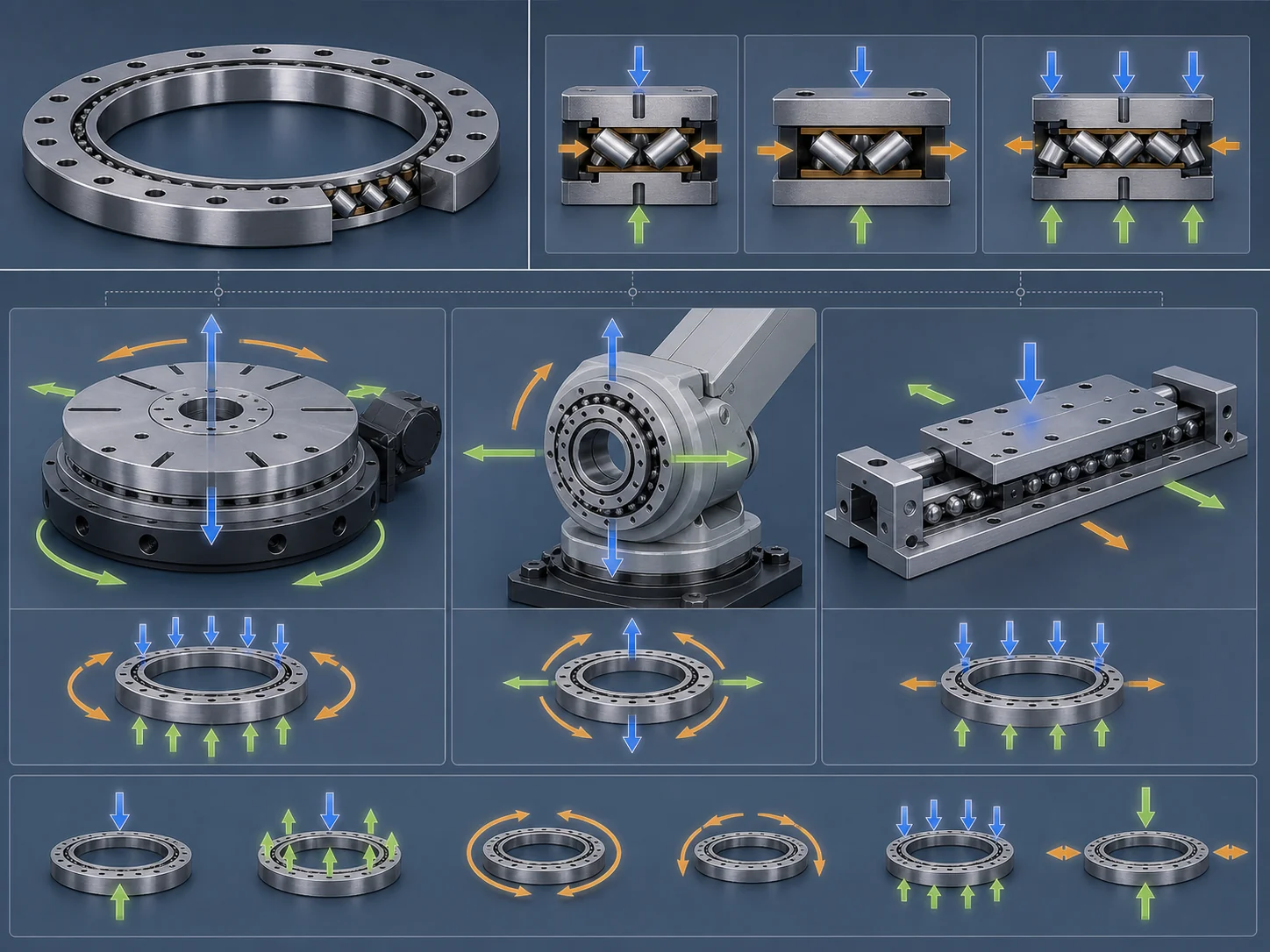
TFL Supply Chain Review Support
TFL Bearings acts as a bearing supply chain integrator, so model review can also cover sourcing route, cost-saving alternatives, inspection, documents, and export coordination after RFQ evidence is validated.
Pre-audited manufacturing resources
TFL Bearings can coordinate cross roller bearing options across reviewed China manufacturing resources when the RFQ includes model, drawing, quantity, and application evidence.
Cost-saving candidate review
For replacement or cross-reference work, TFL Bearings can review dimensional interchangeability, preload, accuracy, rigidity, mounting, and application limits before quotation.
BOM and shipment coordination
Mixed-model requests can be reviewed for one PO, combined shipment, inspection, export packaging, and document support when the order scope is clear.
Product Options to Review
The application page routes the request to the correct product, supplier, replacement, or RFQ path.
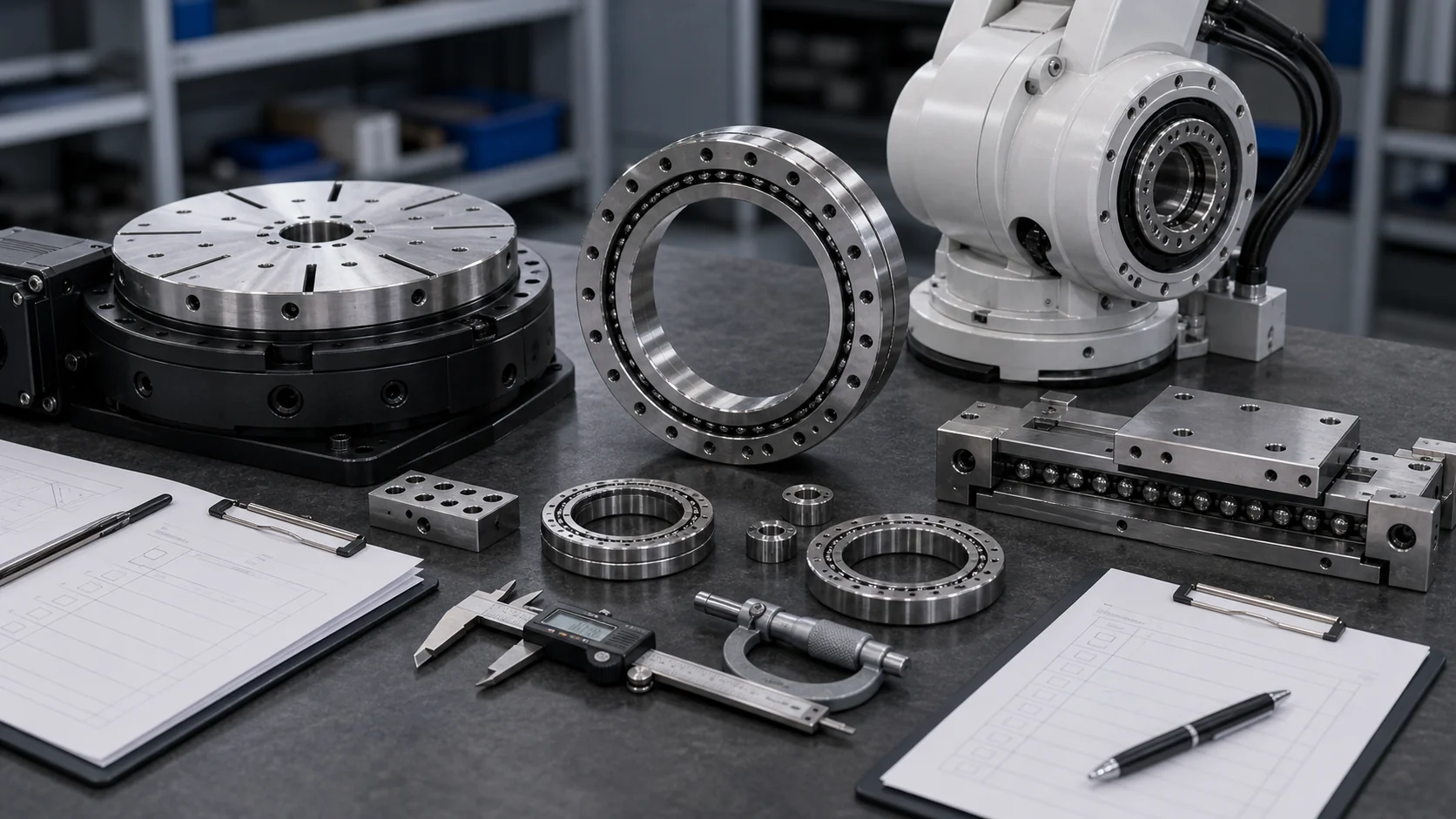
What to Send TFL
A short application label is not enough for reliable review; send model evidence and operating details together.
Application Constraint Review
TFL Bearings reviews cross roller bearing applications by checking load behavior, mounting structure, preload, rigidity, motion profile, speed, heat, lubrication, environment, and RFQ scope.
Radial, axial, moment load, and how the load passes through the machine structure
Changes bearing family, preload, rigidity target, and whether product or custom review is needed.
Housing, shaft, bolt pattern, seating face, clamping method, and adjacent parts
Mounting distortion can change runout, stiffness, heat, and service behavior.
Continuous rotation, indexing, oscillation, speed, acceleration, and duty cycle
Changes heat, lubrication, torque, vibration, and review risk before RFQ.
Lubrication, contamination, temperature, sealing, access, and maintenance condition
Can change feasible product route, inspection request, and quotation notes.
Fit Notes by Application Route
The application hub page should route buyers by machine condition rather than treating all cross roller bearing applications as the same request.
Application RFQ Review Workflow
TFL Bearings uses the application evidence to decide whether the request belongs to product review, application fit review, replacement validation, or custom drawing review.
Application evidence intake
TFL Bearings checks model evidence, drawing, dimensions, machine role, load direction, quantity, timing, and sourcing goal before selecting the review route.
Constraint and supply validation
Preload, rigidity, mounting, speed, heat, lubrication, vibration, accuracy, environment, replacement route, and China-made alternative options are reviewed before quote preparation.
RFQ route decision
The request moves to product review, replacement review, custom/OEM review, BOM consolidation, or quotation after the application constraints are validated.
Application RFQ Evidence Checklist
Send the model or drawing with application, load direction, mounting, motion, speed, preload, rigidity, quantity, and timing so TFL Bearings can validate the review path.
Request Application Fit Review- Model code, partial code, old bearing marking photo, or drawing reference.
- Bore, OD, width, mounting holes, ring structure, shaft, housing, or seating face information.
- Machine drawing, installation photo, reducer / table / joint drawing, or measured sketch.
- Application, load direction, speed, motion profile, duty cycle, and environment.
- Preload, torque behavior, rigidity, vibration, lubrication, runout, or accuracy requirement.
- Quantity, timing, prototype / maintenance / batch context, document need, packaging, destination, and contact details.
Related Product, Supplier, Application, and RFQ Links
Use these review paths to connect provided evidence with the next sourcing, application, replacement, or RFQ action.
Cross roller bearing selection page
Route product family review.
Review optionRobotics crossed roller bearings
Review robot joint applications.
Review optionHarmonic drive cross roller bearing
Review reducer output support.
Review optionCross roller bearing rotary table
Review rotary table applications.
Review optionFAQ
Common reviews include robot joints, harmonic drives, rotary tables, indexing axes, automation equipment, machine tools, and precision positioning stages. Final review depends on load, mounting, rigidity, environment, and quantity.
Yes. TFL reviews application requests by checking model evidence, dimensions, mounting, load direction, application conditions, and RFQ scope.
Yes. A drawing, sample photo, or measured bearing can support review when it shows mounting interface, ring structure, dimensions, application, and quantity.
Send model or marking, bore, outside diameter, width, mounting details, drawing or photos, application, load direction, accuracy or preload notes, quantity, and target timing.