
What Is a Cross Roller Bearing?
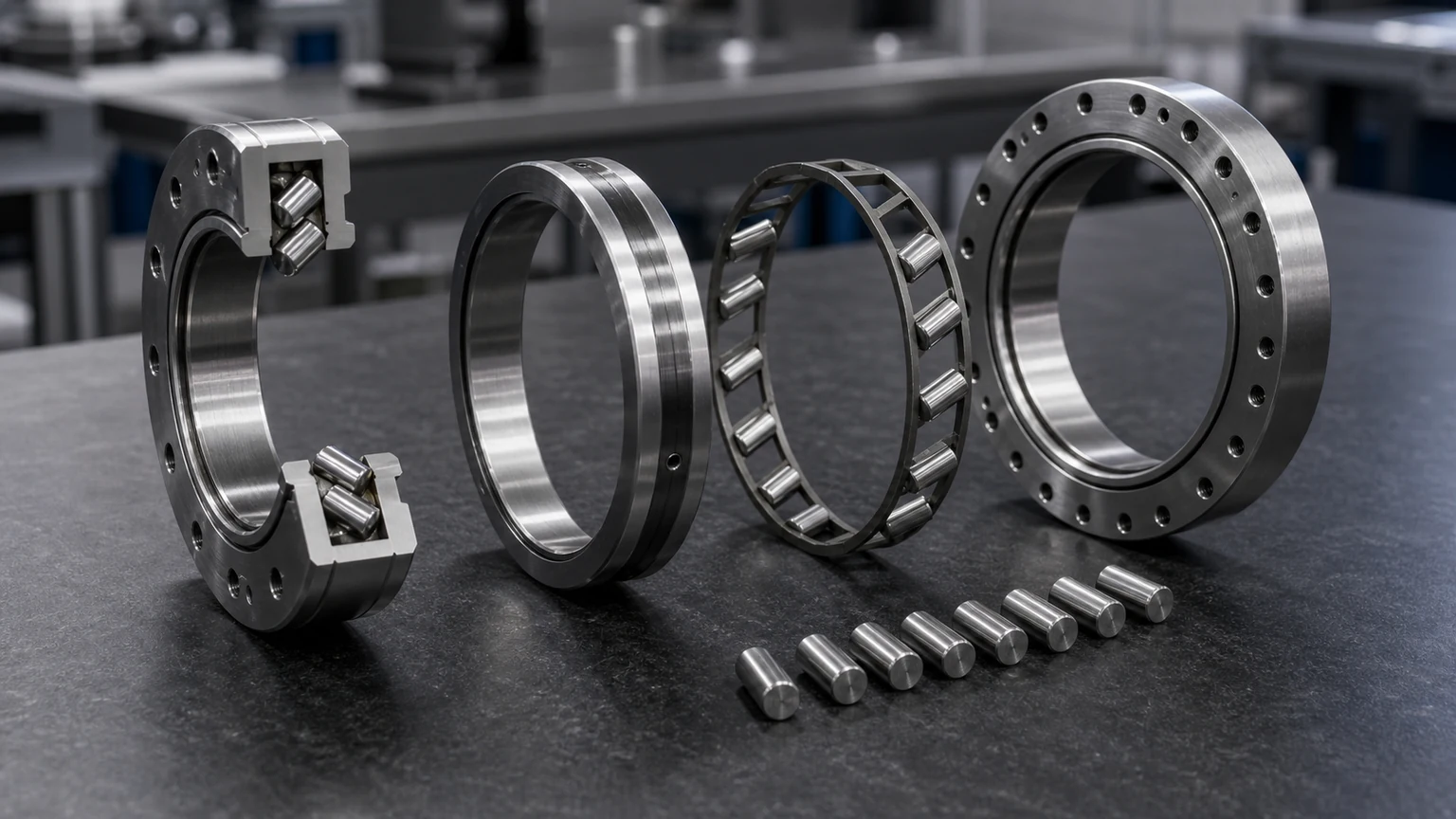
A cross roller bearing uses crossed cylindrical rollers to support combined radial, axial, and moment loads in compact rotary structures. TFL Bearings reviews structure evidence, dimensions, mounting, application, quantity, and timing before RFQ.
Structure and Selection Review
TFL Bearings frames the definition of a cross roller bearing as an RFQ starting point tied to structure, load path, mounting, and application evidence.
Crossed cylindrical rollers
Rollers arranged at alternating angles support radial, axial, and moment loads through a compact ring set.
Compact rotary support
The product route is often reviewed for robot joints, rotary tables, reducers, and precision positioning axes.
Mounting and preload matter
Ring structure, seating faces, preload, lubrication, and installation affect performance.
Definition to evidence
A buyer still needs model, dimensions, drawing or photo, application, quantity, and timing before quotation.
Structure Evidence Before RFQ
The definition is useful only when it leads to the evidence TFL Bearings needs for product review.
Confirm the bearing structure
Identify crossed rollers, ring structure, flanges, mounting holes, and whether the bearing is rotary or guide-style.
Measure the envelope
Record bore, OD, width, hole pattern, seating faces, and nearby shaft or housing references.
Define the application
State machine type, load direction, moment load, speed, preload, accuracy, lubrication, and environment.
Prepare quotation evidence
Add quantity, target timing, destination, document need, and the exact selection question.
TFL Supply Chain Review Support
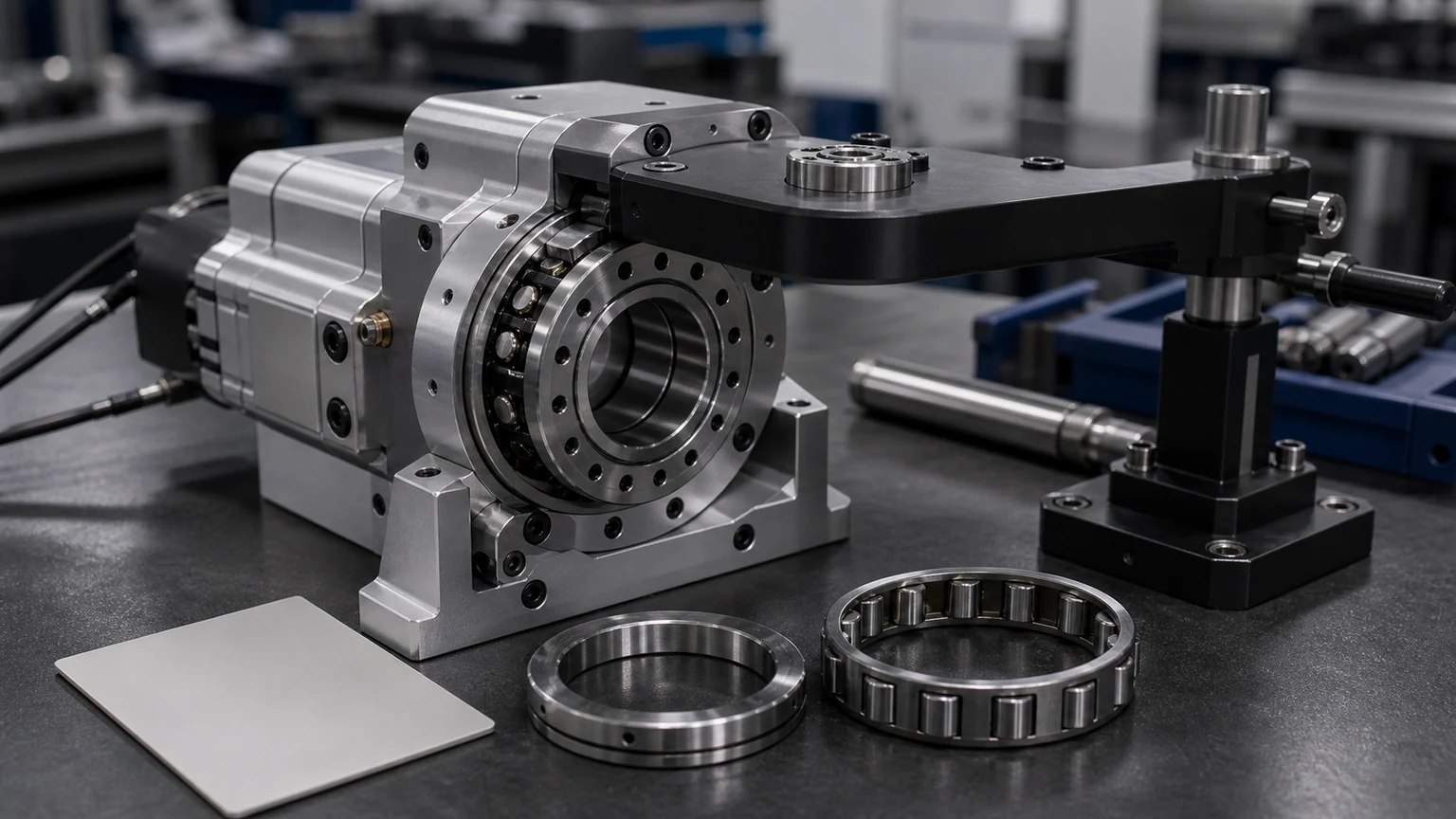
TFL Bearings acts as a bearing supply chain integrator, so model review can also cover sourcing route, cost-saving alternatives, inspection, documents, and export coordination after RFQ evidence is validated.
Pre-audited manufacturing resources
TFL Bearings can coordinate cross roller bearing options across reviewed China manufacturing resources when the RFQ includes model, drawing, quantity, and application evidence.
Cost-saving candidate review
For replacement or cross-reference work, TFL Bearings can review dimensional interchangeability, preload, accuracy, rigidity, mounting, and application limits before quotation.
BOM and shipment coordination
Mixed-model requests can be reviewed for one PO, combined shipment, inspection, export packaging, and document support when the order scope is clear.
Support Review Boundary
Boundary wording follows supplier action, evidence requirement, risk boundary, and RFQ next step.
What to Send TFL Bearings
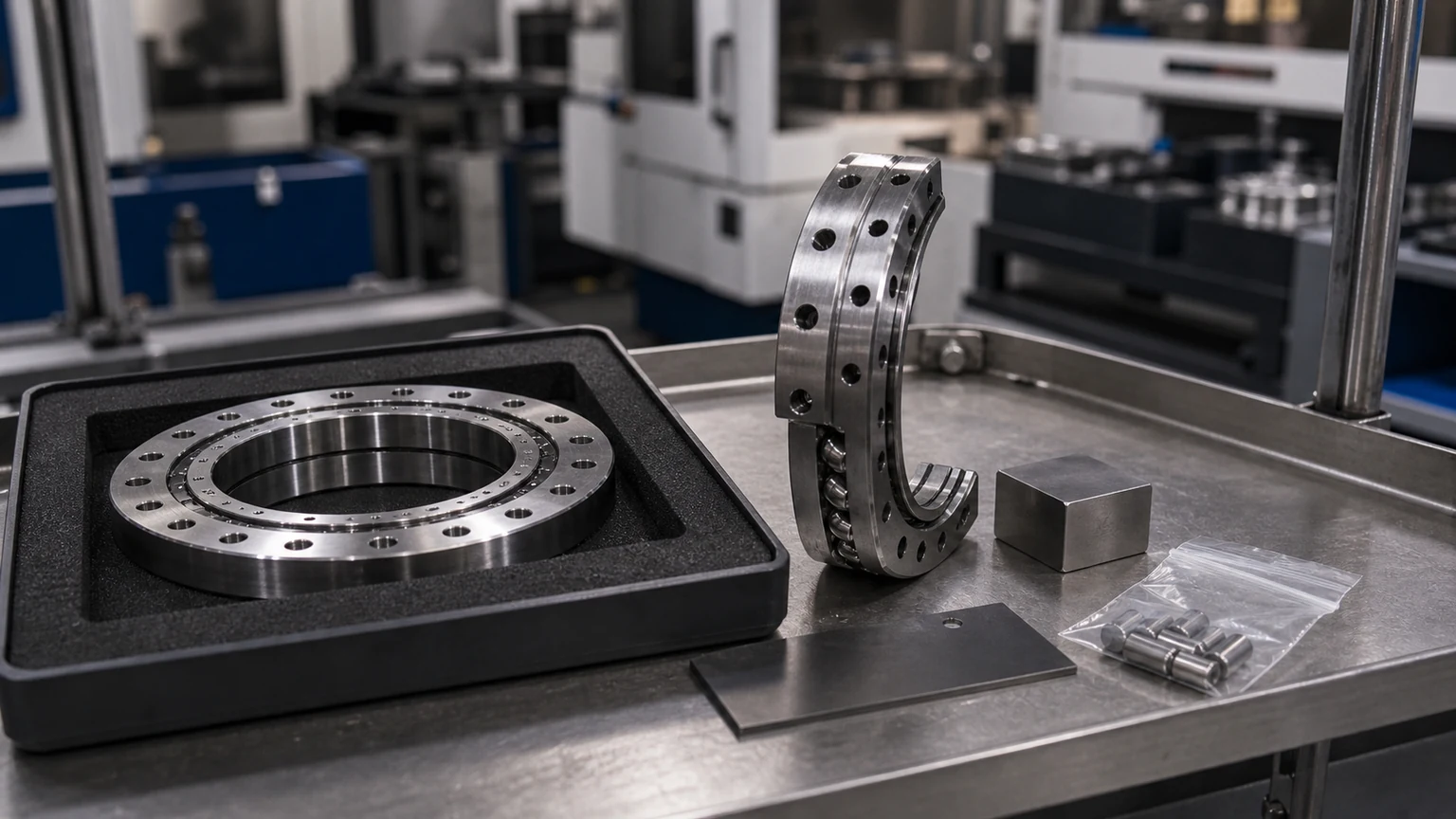
A support request becomes useful for quotation only when the technical evidence and purchasing scope arrive together.
Engineering Decision Layer
TFL Bearings reviews structure evidence by checking whether the request is ready for product selection, application fit review, replacement validation, or RFQ.
Rotary cross roller bearing, crossed roller guide, slewing support, or replacement candidate
Prevents a general definition from routing to the wrong product family.
Radial, axial, and moment loads tied to the machine structure
Defines whether compact combined-load support is the reason for review.
Bore, OD, width, ring structure, mounting holes, shaft, housing, and seating face
Can change series choice, custom route, or replacement review.
Preload, clearance, speed, torque, lubrication, heat, accuracy, and environment
Changes quotation notes and feasibility review.
Application Fit Notes
TFL Bearings reviews the support topic against the machine condition before treating the request as quote-ready.
RFQ Process Depth Layer
The support review path separates reference evidence from quotation evidence before pricing or timing discussion.
Evidence intake
TFL Bearings checks the submitted model evidence, drawing, dimensions, application condition, quantity, timing, sourcing goal, and open technical question.
Engineering screening
Load direction, mounting interface, preload, lubrication, rigidity, speed, heat, replacement route, and document scope are reviewed before quotation follow-up.
RFQ route decision
The request is routed to product review, replacement review, missing-evidence follow-up, BOM consolidation, or quotation after the support evidence is validated.
Practical RFQ Checklist
Use the structure question to prepare an RFQ package that TFL Bearings can validate.
Send Model for Review- Model, product family, old marking, drawing, sample photo, or structure question.
- Bore, OD, width, ring form, mounting holes, seating face, shaft, and housing evidence.
- Radial, axial, moment load, speed, preload or clearance, rigidity, runout, and lubrication details.
- Application, machine role, duty cycle, environment, quantity, and target timing.
- Document need, inspection scope, destination, and open constraints.
- The exact decision needed from TFL Bearings before quotation.
Structure and RFQ Review Paths
Use these review paths to connect provided evidence with the next sourcing, application, replacement, or RFQ action.
Cross roller bearing product review
Use when the product family is already the starting point.
Review optionCrossed roller guide review
Use when the request is linear guide or slide related.
Review optionApplication review hub
Connect structure to machine duty and load direction.
Review optionRFQ evidence intake
Send model, drawing, application, quantity, and timing.
Review optionFAQ
A cross roller bearing uses crossed cylindrical rollers between ring raceways to support combined radial, axial, and moment loads in compact rotary structures.
Send model evidence, measured dimensions, drawing or photo, mounting interface, application, load direction, quantity, target timing, and document needs.
No. TFL Bearings still needs dimensions, ring structure, mounting details, application duty, quantity, and RFQ validation before model or quotation review.
Common review contexts include robot joints, harmonic drives, rotary tables, precision stages, measuring equipment, and compact combined-load rotary axes.