
Timken Cross Roller Bearing Cross Reference
Timken cross roller bearing cross-reference review should stay focused on cross roller bearing evidence, dimensions, mounting interface, application duty, quantity, and timing before RFQ, without drifting into tapered-roller selection.
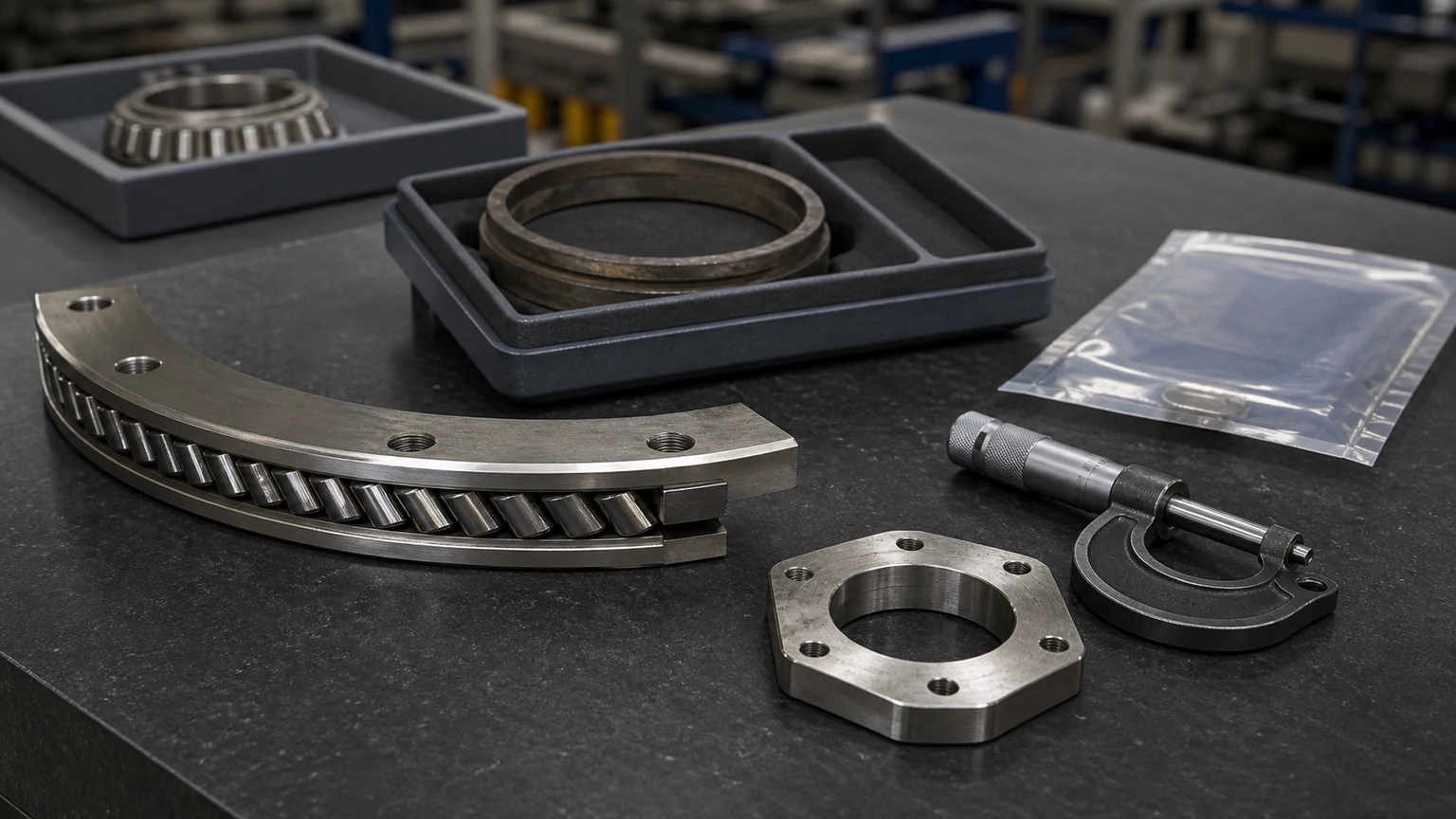
Cross-Reference Evidence Review
TFL Bearings treats Timken cross roller bearing cross-reference requests as candidate review before RFQ, not as a dealer listing or final fit approval.
Cross roller focus
The request should stay tied to cross roller bearing structure, not tapered roller selection.
Model and dimensions
Old model evidence should be validated with bore, OD, width, and ring form.
Interface review
Mounting face, hole pattern, shaft, and housing details can change candidate risk.
Application duty
Load direction, speed, rigidity, quantity, and timing should be included.
Model Evidence Checklist Before RFQ
A cross-reference request should convert old codes, photos, measured values, and machine duty into evidence TFL Bearings can screen.
Capture old evidence
Use clear marking photos, old order lines, catalog references, measured sketches, or sample photos as candidate evidence.
Measure the interface
Confirm bore, outside diameter, width, mounting holes, pitch circle, ring structure, seating face, and adjacent parts.
Connect machine duty
State load direction, moment load, speed, preload or clearance, rigidity, lubrication, environment, and machine role.
Prepare RFQ scope
Add quantity, target timing, destination, inspection need, document scope, and the exact open question blocking review.
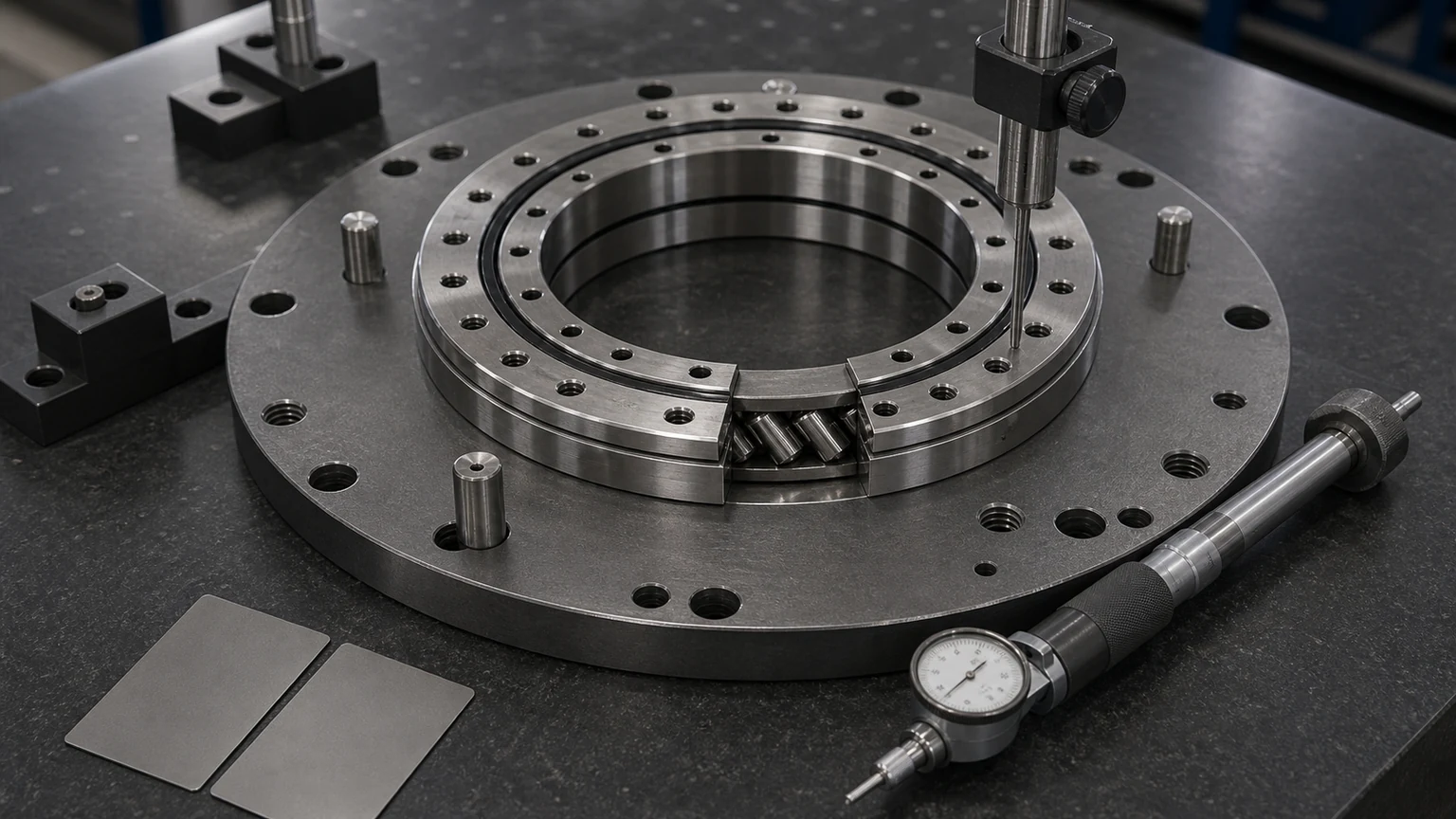
TFL Supply Chain Review Support
TFL Bearings acts as a bearing supply chain integrator, so model review can also cover sourcing route, cost-saving alternatives, inspection, documents, and export coordination after RFQ evidence is validated.
Pre-audited manufacturing resources
TFL Bearings can coordinate cross roller bearing options across reviewed China manufacturing resources when the RFQ includes model, drawing, quantity, and application evidence.
Cost-saving candidate review
For replacement or cross-reference work, TFL Bearings can review dimensional interchangeability, preload, accuracy, rigidity, mounting, and application limits before quotation.
BOM and shipment coordination
Mixed-model requests can be reviewed for one PO, combined shipment, inspection, export packaging, and document support when the order scope is clear.
Candidate Review Boundary
Boundary wording follows supplier action, evidence requirement, risk boundary, and RFQ next step.
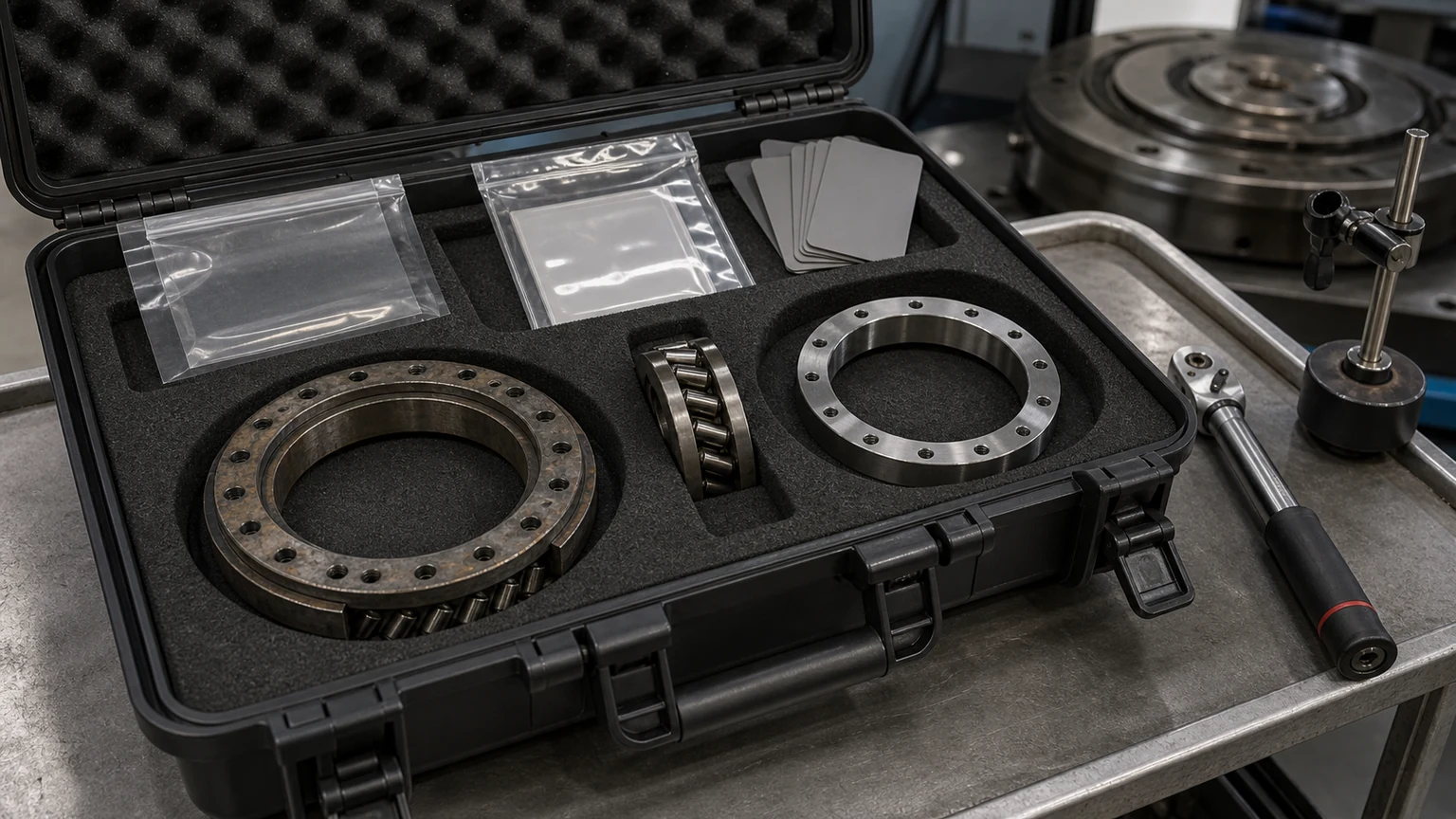
What to Send TFL Bearings
A useful candidate review package separates confirmed facts from unknown details before quotation.
Engineering Decision Layer
TFL Bearings reviews Timken candidate requests by checking cross roller bearing model evidence, dimensions, mounting interface, and application duty while removing tapered-roller topic drift before deciding whether the evidence is ready for candidate screening, drawing review, or RFQ follow-up.
Full code, suffix, partial marking, catalog source, old purchase line, or sample photo
Defines whether the request can start as candidate review or needs missing-evidence follow-up.
Bore, OD, width, mounting holes, ring form, seating face, and surrounding interface
Prevents a similar model phrase from being treated as fit confirmation.
Machine role, load direction, speed, preload, rigidity, lubrication, and environment
Can change the route from candidate match to product, replacement, or drawing review.
Quantity, timing, destination, inspection need, and document scope
Quotation follow-up starts after the technical evidence and purchasing scope are clear.
Application Fit Notes
Candidate matching should stay connected to the machine condition before any quotation decision.
RFQ Process Depth Layer
The cross-reference path separates old evidence from quotation evidence before price, timing, or document discussion.
Evidence intake
TFL Bearings checks old model evidence, photos, drawings, measured dimensions, application, quantity, timing, and sourcing goal before selecting the review route.
Candidate and supply screening
Dimensions, mounting interface, suffix evidence, preload, rigidity, load direction, lubrication, environment, short-lead options, and China-made alternatives are reviewed before quotation.
RFQ route decision
The request moves to candidate review, replacement review, drawing review, product review, consolidated sourcing, or quotation after evidence validation.
Practical RFQ Checklist
Prepare these details before asking TFL Bearings to review Timken cross-reference evidence.
Request Candidate Review- Brand, model, suffix, old marking photo, catalog reference, drawing, or order evidence.
- Bore, OD, width, mounting holes, seating face, ring structure, and measured values.
- Machine type, application duty, radial / axial / moment load, speed, duty cycle, and environment.
- Preload, clearance, torque behavior, rigidity, accuracy, lubrication, or symptom details when relevant.
- Quantity, target timing, destination, inspection need, document scope, packaging, and shipment context.
- The exact decision needed from TFL Bearings before quotation.
Cross-Reference Evidence Review Paths
Use these review paths to connect provided evidence with the next sourcing, application, replacement, or RFQ action.
Cross-reference hub
Return to the main candidate validation route.
Review optionCross roller bearing product review
Connect candidate evidence to product-family screening.
Review optionReplacement intake
Use when old bearing evidence or installed-machine context is central.
Review optionRFQ evidence intake
Send model, drawing, application, quantity, and timing for review.
Review optionFAQ
Yes. TFL Bearings can review Timken candidate evidence when the buyer provides model markings, dimensions, drawing or photo, application, quantity, and timing.
Send the old model or marking, suffix, bore, OD, width, mounting interface, application duty, load direction, quantity, target timing, and document needs.
No. TFL Bearings still needs measured dimensions, mounting details, application duty, preload or clearance context, quantity, and RFQ validation before fit, price, timing, or replacement scope can be reviewed.
Yes. Drawings, sample photos, installed-bearing photos, and measured sketches can support candidate screening, cost-saving alternative review, and quotation follow-up.