
Custom Cross Roller Bearings: Drawing and Feasibility Review
Use the custom route only when a standard model cannot satisfy the required envelope, ring structure, mounting interface, accuracy, or application constraint. The first step is a controlled drawing and feasibility review—not a promise that every concept is manufacturable.
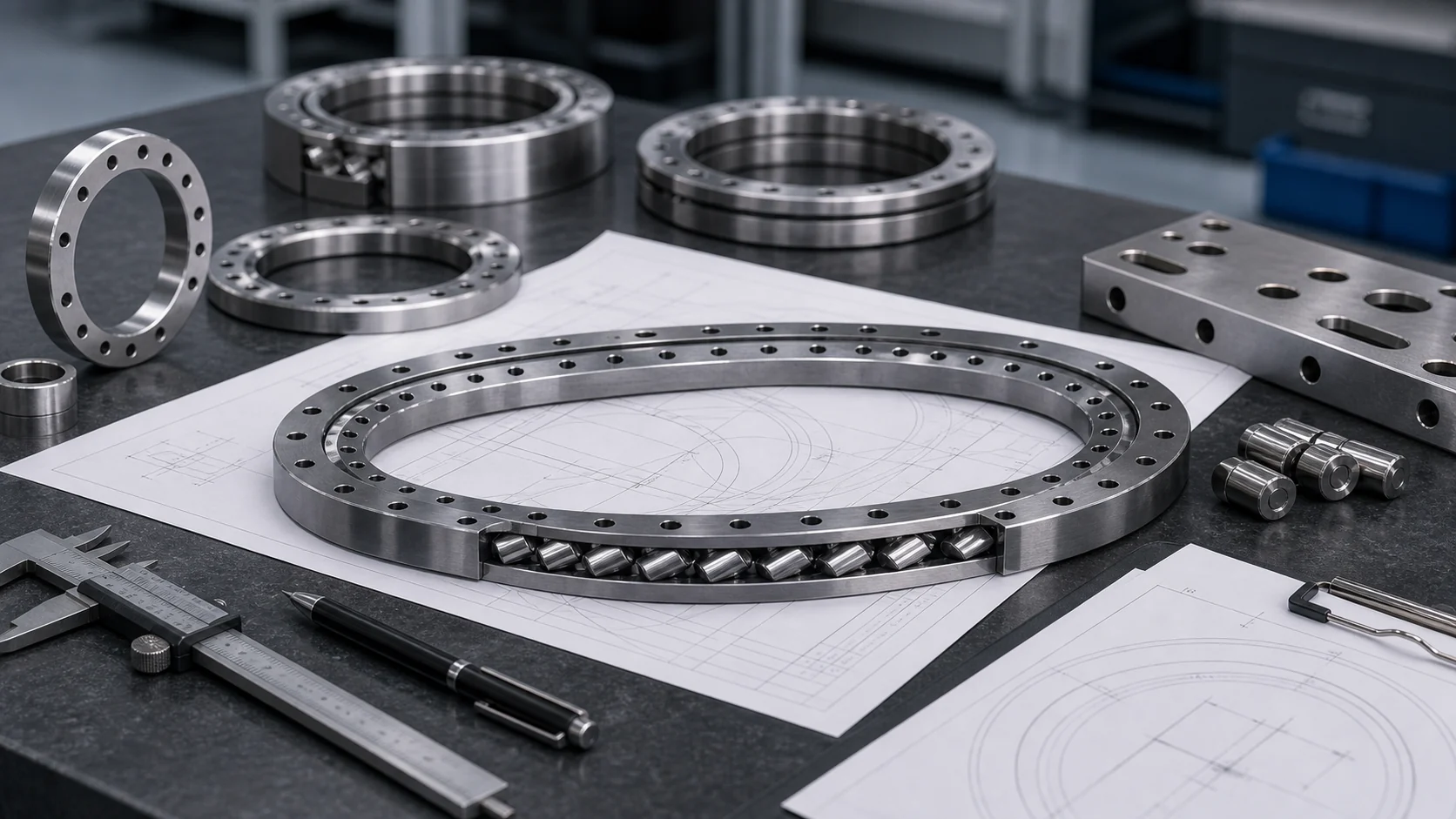
When Is a Custom Bearing Review Appropriate?
A custom request needs a defined engineering reason. If an existing series can meet the requirement after normal selection, the standard route should be reviewed first.
Standard size cannot fit
Available bore, outside diameter, width, flange, bolt pattern, or adjacent parts create a fixed installation boundary.
Non-standard ring or interface
Integrated or separable rings, mounting features, holes, flanges, or access constraints require drawing review.
Application constraint drives the request
Load direction, moment, stiffness, torque behavior, accuracy, speed, lubrication, or environment must be defined.
Quantity and validation path are known
Quantity, project stage, sample expectations, inspection needs, and timing context determine whether review can proceed.
Custom Drawing Package Requirements
A revision-controlled package should distinguish mandatory interfaces, performance requirements, reference information, and unresolved questions.
Identify the revision and units
Send CAD and PDF when available, with drawing number, revision, units, section views, and a contact for technical questions.
Mark critical interfaces
Identify bore, OD, width, ring features, mounting holes, flanges, adjacent parts, fits, and which dimensions are truly critical.
Define operating requirements
Include load cases and directions, moment, speed or oscillation, rigidity or accuracy need, lubrication, environment, and expected duty.
Define validation and procurement
State quantity, project stage, sample or first-article expectations, inspection and document needs, destination, and timing context.
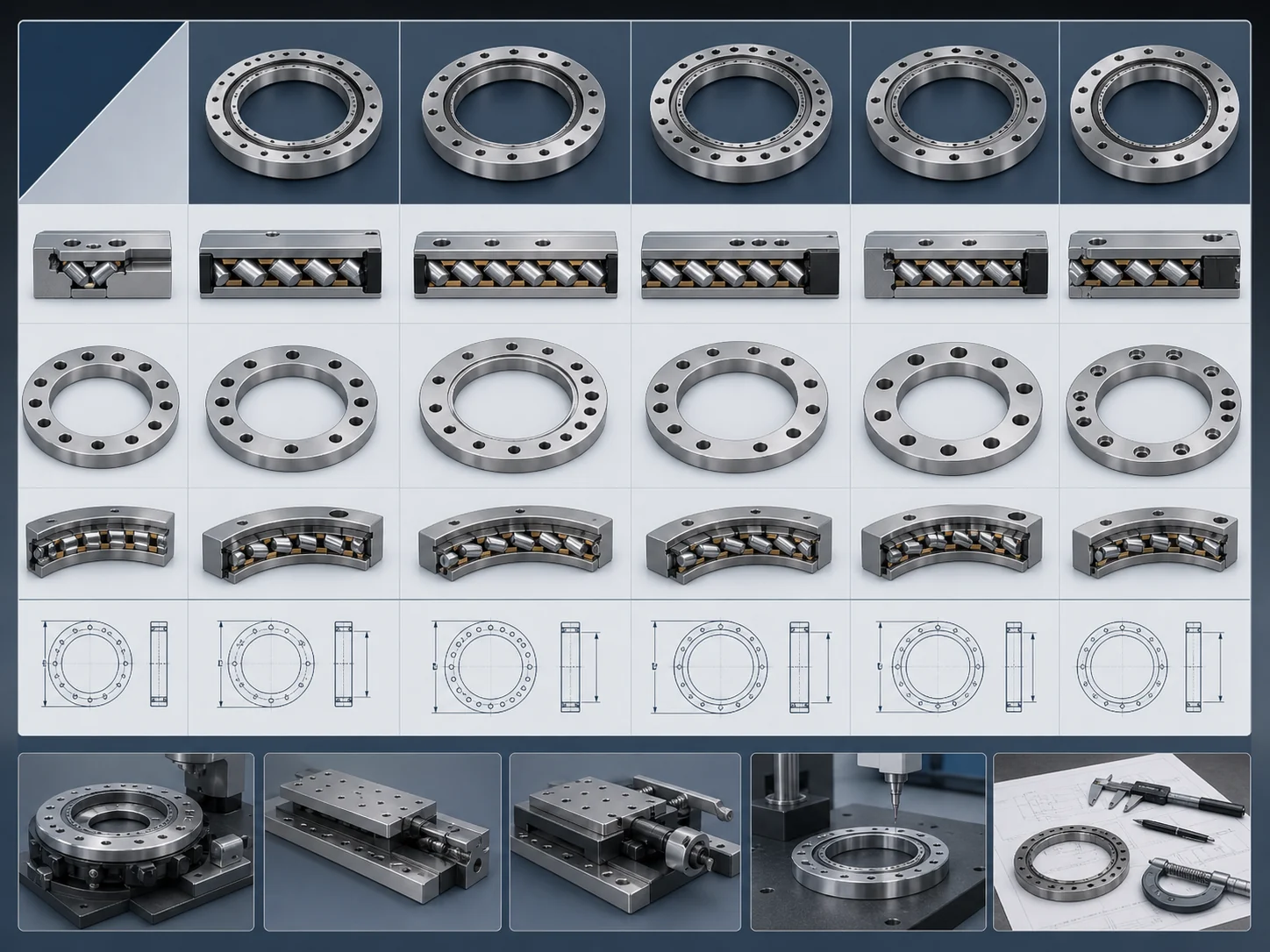
TFL Supply Chain Review Support
TFL Bearings acts as a bearing supply chain integrator, so model review can also cover sourcing route, cost-saving alternatives, inspection, documents, and export coordination after RFQ evidence is validated.
Pre-audited manufacturing resources
TFL Bearings can coordinate cross roller bearing options across reviewed China manufacturing resources when the RFQ includes model, drawing, quantity, and application evidence.
Cost-saving candidate review
For replacement or cross-reference work, TFL Bearings can review dimensional interchangeability, preload, accuracy, rigidity, mounting, and application limits before quotation.
BOM and shipment coordination
Mixed-model requests can be reviewed for one PO, combined shipment, inspection, export packaging, and document support when the order scope is clear.
Custom Request Definition Matrix
Choose the least speculative route that matches the evidence currently available.
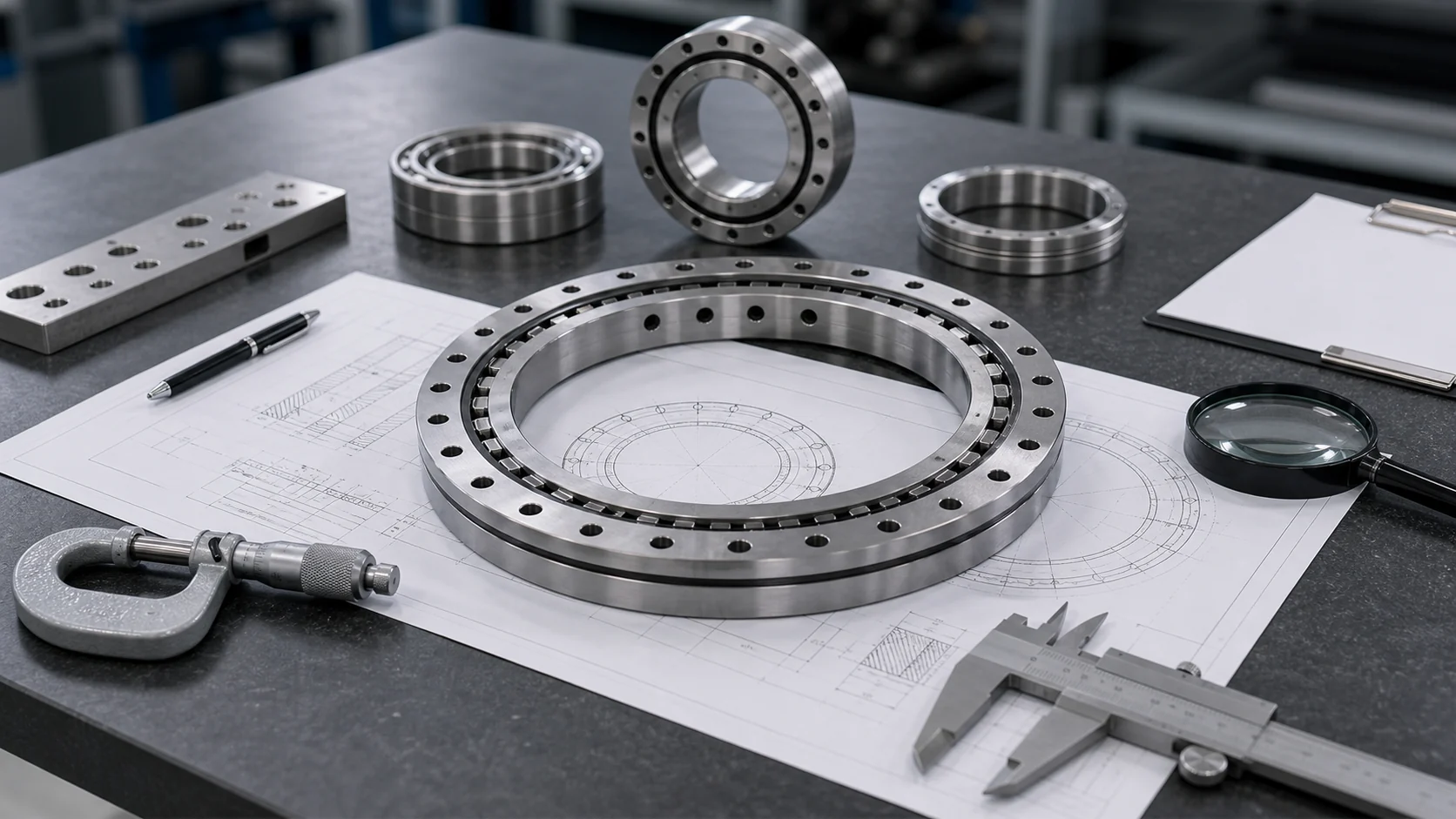
Custom Bearing RFQ Evidence Checklist
Submit enough evidence to review feasibility without inventing tolerances, production capability, price, or timing.
Feasibility Questions Before Quotation
Custom review starts by checking whether the request is sufficiently defined. Drawing quality, interfaces, load cases, accuracy need, mounting, lubrication, environment, validation scope, and quantity must be understood before a supply path can be discussed.
CAD, PDF, drawing number, revision, units, section views, and critical-dimension markers
Determines whether reviewers are evaluating the same controlled geometry or an incomplete concept.
Bore, OD, width, ring structure, mounting holes, and adjacent parts
Controls whether a standard, modified, or custom path is realistic.
Load cases, stiffness or accuracy need, lubrication, environment, quantity, validation, and inspection need
Separates mandatory engineering requirements from preferences that may be revised during feasibility review.
Load direction, speed, heat, lubrication, environment, and rigidity
May stop the request from moving directly to quote until feasibility is reviewed.
Custom Review Decisions by Request Type
The request should make clear why a standard route is insufficient and what evidence supports the next review step.
Custom RFQ Review Workflow
TFL Bearings reviews custom requests through evidence intake, feasibility validation, and quotation decision instead of treating every drawing as manufacturable.
Evidence intake
TFL Bearings checks model evidence, drawing, dimensions, photo, application, quantity, timing, and sourcing scope before selecting the review route.
Engineering and sourcing validation
Load direction, preload, rigidity, mounting, accuracy, speed, heat, environment, stock/short-lead options, and candidate alternatives are reviewed before quote preparation.
Quotation decision
Price, lead time, inspection, document, packaging, and shipment notes are prepared only after the candidate route is validated.
Custom RFQ Evidence Checklist
Send a drawing package, target dimensions, mounting interface, load direction, speed, accuracy or preload requirement, quantity, timing, and application context.
Send Drawing for Review- Model code, partial code, or bearing marking photo.
- Bore, OD, width, mounting holes, flange, ring structure, rail length, or stroke as applicable.
- Drawing, installation photo, CAD reference, sample photo, or measured sketch.
- Application, load direction, speed, duty cycle, and environment.
- Preload, torque behavior, rigidity, repeatability, or accuracy requirement.
- Quantity, timing, destination, inspection need, document scope, packaging, and shipment context.
Related Product, Supplier, Application, and RFQ Links
Use these review paths to connect provided evidence with the next sourcing, application, replacement, or RFQ action.
Cross roller bearing supplier capability
Route broader sourcing needs.
Review optionPrecision crossed roller bearing supplier options
Route precision supplier intent.
Review optionCross-reference support
Check old model references before custom work.
Review optionSend drawing for review
Send the custom RFQ package.
Review optionFAQ
Use custom review when a defined envelope, ring structure, mounting interface, or operating requirement cannot be satisfied through a standard selection path.
Include drawing number and revision, units, CAD/PDF files, critical interfaces, dimensions, application, load cases, accuracy or rigidity need, lubrication, environment, quantity, and validation requirements.
A photo or sketch can start clarification, but it cannot confirm feasibility. Controlled geometry, interfaces, operating requirements, quantity, and inspection scope are still needed.
No. Those items are request-specific and must not be assumed before the drawing, requirements, quantity, validation scope, and supply feasibility are reviewed.